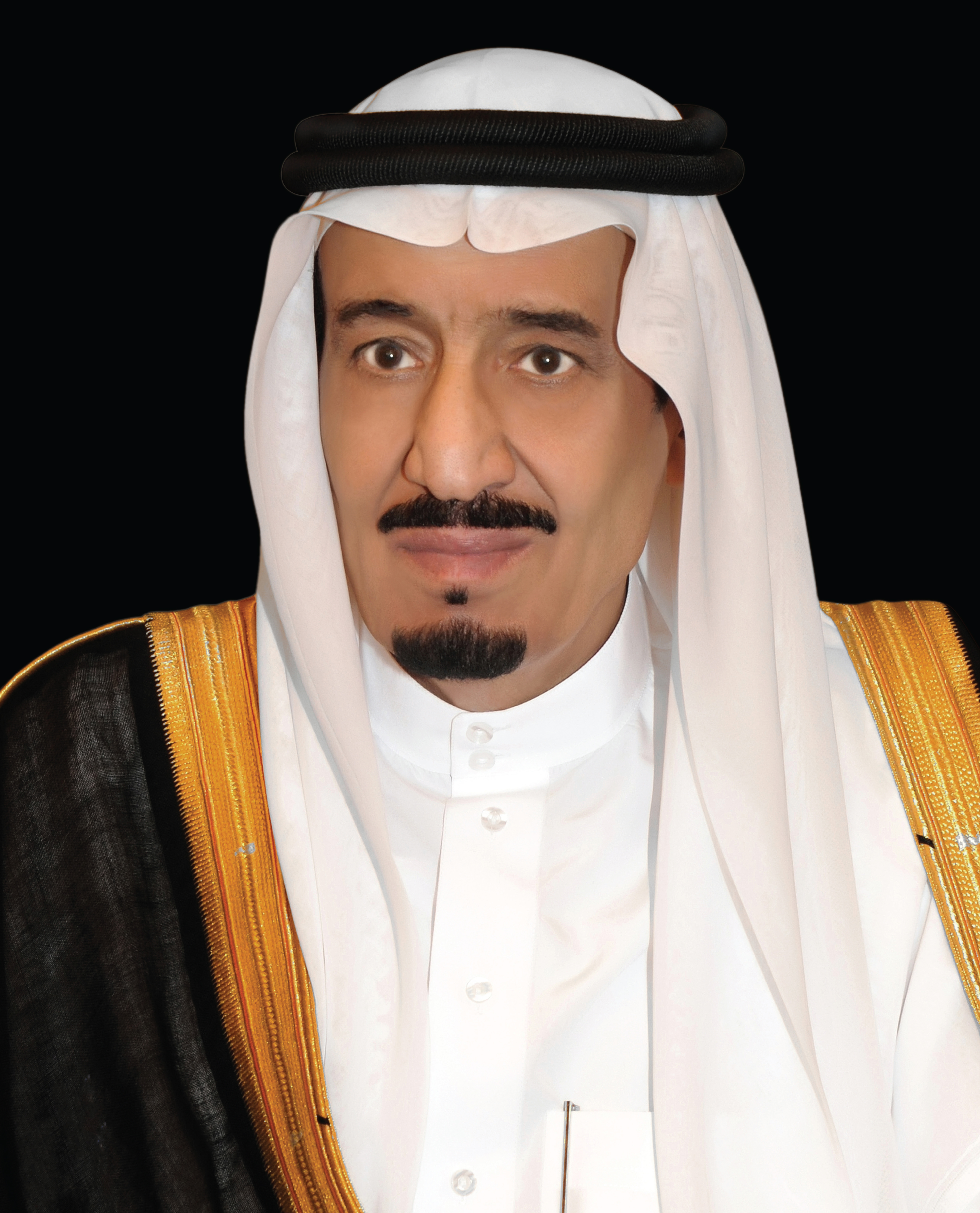

King Salman bin Abdulaziz Al Saud is the Custodian of the Two Holy Mosques and the seventh King of the Kingdom of Saudi Arabia. He assumed the throne on January 23, 2015, and is the fifteenth ruler of the Saudi state since 1727. His leadership blends a historian’s regard for origins with a statesman’s drive for transformation—anchored in the Qur’an and Sunnah and carried forward through institutional reform, national strategy, and an unwavering commitment to serve pilgrims, citizens, and the wider Muslim world.

Early life and education
Born in Riyadh on December 31, 1935, King Salman was raised by the Founding King Abdulaziz and Princess Hessa bint Ahmed Al Sudairi. He studied at the Princes’ School in Riyadh and completed memorization of the Qur’an at age ten. From a young age he attended his father’s majlis, gaining fluency in the political, social, and economic questions of the day.

Governor of Riyadh: foundations of modern urban Saudi Arabia
Appointed Acting Governor of Riyadh in 1954 and Governor in 1955 (reappointed in 1963), he led Riyadh’s evolution from a mid-century town into a global capital. He conceived and chaired the High Commission for the Development of Riyadh (now the Royal Commission for Riyadh City), launched landmark projects such as the Diplomatic Quarter and the redevelopment of the al-Hukm Palace district, and helped define the values that later informed the “King Salman Charter for Architecture and Urbanism.” Under his stewardship, the province saw comprehensive road, services, cultural, and institutional build-out that set a national template for planned urban growth.

Minister of Defense and Crown Prince
Named Minister of Defense in 2011, he assessed and modernized armed forces organization, training, and readiness. In 2012 he became Crown Prince and Deputy Prime Minister, managing state affairs and representing Saudi Arabia abroad. In April 2012, during an official U.S. visit as Crown Prince, he met President Barack Obama in Washington, D.C.

Accession to the throne and early restructuring
Pledged allegiance as King on January 23, 2015, he quickly reconstituted government to streamline decision-making. Within the first forty days, he issued a series of Royal Orders that reorganized councils and ministries, creating the Council of Political and Security Affairs and the Council of Economic and Development Affairs to align security, economic, and development policy. He advanced generational integration in leadership and, with the Allegiance Council’s approval in 2017, appointed Prince Mohammed bin Salman Crown Prince and Deputy Prime Minister.

Vision 2030: a program of national transformation
Under King Salman’s leadership—and with Crown Prince Mohammed bin Salman as architect—Saudi Vision 2030 set three pillars: a vibrant society, a thriving economy, and an ambitious nation. It established 96 strategic objectives and a portfolio of Vision Realization Programs spanning human capability, industry and logistics, the economy and finance, health, housing, quality of life, Hajj and Umrah experience, privatization, and the Public Investment Fund’s role. In 2024, Riyadh won the bid to host Expo 2030, reflecting international confidence in the country’s trajectory.
Judicial, governance, and integrity reforms
A series of structural steps strengthened institutional independence and accountability. The Investigation and Public Prosecution Authority was transformed into the independent Public Prosecution, reporting directly to the King. A supreme anti-corruption committee was formed to investigate major public-integrity cases, recover funds, and centralize enforcement. Specialized legislative projects advanced evidence, personal status, civil transactions, and penal codification—modernizing procedures while remaining grounded in Sharia.
Economy, industry, and localization
Policies prioritized diversification and private-sector growth, enabling strong post-pandemic performance and G20-leading GDP growth rates in 2022. Vision 2030 launched the National Industrial Development and Logistics Program, “Made in Saudi,” and the Local Content and Government Procurement Authority. In defense, the General Authority for Military Industries and the General Authority for Defense Development were established to localize over half of military spending by 2030. Mining and export finance were accelerated through digital licensing platforms, a national geological database, the Saudi EXIM Bank, and streamlined investor services.
Digital government and data-driven delivery
The Digital Government Authority and the Unified National Platform expanded access, quality, and transparency of e-services. By 2022, Saudi Arabia achieved its highest-ever UN e-Government Development Index score and led globally in publishing open government data.

Transport and logistics
The National Transport and Logistics Strategy set out to position the Kingdom as a tri-continental hub, with targets for a new national airline, expanded routes, improved road rankings, new rail links (including an east-west land bridge and GCC rail), and port expansion through public-private partnerships. Airports across the country were modernized, and in 2023 the Public Investment Fund launched Riyadh Air. On November 27, 2024, the Riyadh Metro was inaugurated: six lines, 176 km, and 85 stations.
Tourism and entertainment
Tourist e-visas opened in 2019, accelerating arrivals and lifting the Kingdom up international competitiveness indices. Institutions such as the Saudi Tourism Authority were established, and Riyadh became the first regional headquarters of the UN World Tourism Organization in the Middle East. Entertainment—organized under the General Entertainment Authority—scaled rapidly, with tens of thousands of event-days and over one hundred million visits recorded, contributing directly to quality of life and non-oil growth.

Environment, water, and agriculture
The National Environment Strategy established five specialized centers for compliance, wildlife, meteorology, vegetation, and waste management. Large-scale tree-planting, desertification control, and pollution-monitoring initiatives launched, alongside modernized environmental laws. In water, integrated planning and the Water Law aligned with the National Water Strategy 2030 to conserve resources, expand treated-water use, and ensure sector sustainability. Agriculture focused on food security, aquaculture growth, greenhouse production, terrace restoration, and value-chain finance.
Research, development, and innovation
The Supreme Committee for Research, Development, and Innovation and the RDI Authority catalyzed policy, funding, and coordination across universities and research centers. Outcomes included double-digit growth in publications, rising impact indicators, and top-ten global rankings in venture-capital-related innovation metrics. Defense R&D and dual-use technology programs deepened through dedicated authorities and centers.

Health and education
Health reforms expanded capacity, created regional health clusters, and launched digital tools for virtual care. During COVID-19, the Kingdom ranked among global leaders for health response and research output. In education, the Ministry of Higher Education and Ministry of Education were merged; distance learning scaled nationwide; STEM centers launched; scholarship tracks were refreshed; and Saudi universities advanced in global rankings.
Sports
Since 2018 the Kingdom has hosted more than a hundred international events and secured landmark hosting rights, including the 2034 FIFA World Cup and the 2027 AFC Asian Cup. Domestically, club governance and investment frameworks were upgraded, federations expanded, facilities licensed, and elite pathways developed.
Security and foreign policy
King Salman emphasized international security, peaceful dispute resolution, and support for Arab and Islamic causes, notably the Palestinian cause. He launched Operation Decisive Storm and then Operation Restoring Hope in Yemen to support the legitimate government and humanitarian relief. The Islamic Military Counter Terrorism Coalition was created to unify intellectual, media, security, and military efforts against extremism and terrorism.
Service of the Two Holy Mosques
Projects under his reign included the third Saudi expansion of the Grand Mosque—its largest in history—featuring new bridges, service buildings, tunnels, and capacity upgrades in the Mataf and Saudi Corridor. Expansion and modernization works at the Prophet’s Mosque advanced, and the King Salman Project to expand Quba Mosque will increase its capacity tenfold. The Pilgrim Experience Program digitized and re-designed the full Hajj and Umrah journey, from visas to crowd-flow, health, and visitor services.
Social development and housing
The Housing Program improved ownership access and financing speed, raised homeownership above 60 percent by 2020, scaled developer services, and strengthened dispute resolution and sector data. The National Development Fund was created to coordinate and elevate development finance across the economy.
Women’s empowerment and legal updates
Women’s participation increased through policy changes on mobility, documentation, employment, and public life. Women entered stadiums, launched businesses without guardian approval, and took leadership roles. Legal reforms aligned labor, civil, and personal rights with national priorities and international obligations.
Humanitarian leadership and philanthropy
King Salman’s lifelong philanthropic record culminated in establishing the King Salman Humanitarian Aid and Relief Center (KSrelief), the Kingdom’s arm for foreign relief and development assistance, governance of donations, and impact evaluation. Under his reign, Saudi Arabia led globally in Official Development Assistance to low- and middle-income countries. He has chaired more than twenty-five charitable and cultural institutions and received local and international honors, orders, and honorary doctorates for humanitarian and cultural service.
The historian king: knowledge, culture, and memory
King Salman is widely known for his devotion to history, archives, and scholarship. He guided institutions such as the King Abdulaziz Foundation for Research and Archives (Darah) and established prizes and grants that advance research on the Arabian Peninsula’s history and civilization. His personal library—housing manuscripts, rare books, and extensive references on Saudi and regional history—reflects a lifetime of reading and collecting. He has authored works on the biography of King Abdulaziz and on the historical and intellectual foundations of the Saudi state.
King Salman Foundation: legacy in culture and sustainable urbanization
The King Salman Foundation is a private, non-profit institution dedicated to preserving the King’s philanthropic legacy and supporting his passions for knowledge, history, culture, and sustainable urbanization. Its cultural vision includes King Salman Cultural Centres such as the King Salman Museum, the King Salman Library, and the Saudi Society Museum—platforms to document and present the nation’s heritage and social fabric while promoting inclusive, future-ready urbanism.
Family
King Salman’s family includes sons and a daughter active in public service and national development, among them the Crown Prince and Prime Minister Prince Mohammed bin Salman, the Minister of Energy Prince Abdulaziz bin Salman, the Minister of Defense Prince Khalid bin Salman, and others serving as advisers and leaders in scientific, cultural, and administrative institutions.
Awards, orders, and honors (selected)
Among many recognitions are the King Abdulaziz Order (First Class), King Faisal Prize for Service to Islam, international state orders from countries across the Middle East, Europe, Africa, and Asia, and multiple honorary doctorates in history, arts, political science, law, and service to the Qur’an and Islamic unity.

King Salman’s reign is marked by continuity and change: faithful service to the Two Holy Mosques and pilgrims; decisive modernization of institutions; ambitious social, cultural, economic, and environmental programs; and a sustained commitment to humanitarian action. It is the through-line of a historian king—rooted in memory, attentive to identity—who is shaping the Kingdom’s future with clarity of purpose.
Sources
• Saudipedia: “Salman Bin Abdulaziz Al Saud”
• Embassy of the Kingdom of Saudi Arabia (Washington, D.C.): “King Salman bin Abdulaziz”
• King Salman Foundation (kfs): “About KSF,” mission and cultural centers
Leave a Reply