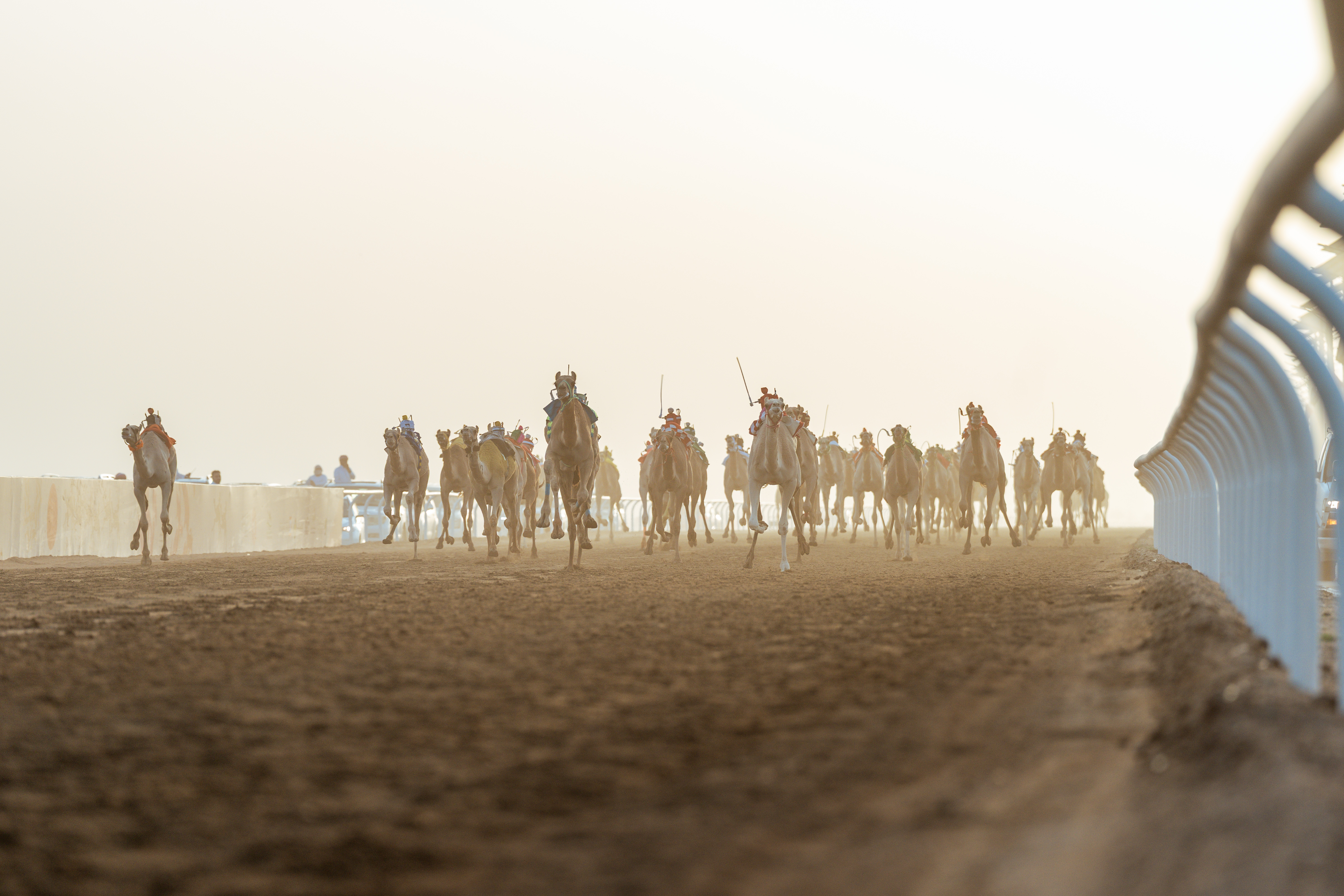


Taif, Saudi Arabia — The second day of the Crown Prince Camel Festival 2025 at the historic Taif racecourse confirmed what fans already suspected: Saudi camels are in unstoppable form. Competing in the ḥaqāyq (haqaiq, “yearling”) category, Saudi stables claimed 20 of the 31 heats, pushing their total wins in the opening days to 45 victories. Qatar followed with 15 wins, while the UAE and Kuwait each secured one.
With 1,458 racing camels across morning and evening sessions, the atmosphere was both electric and fiercely competitive. The standout came from Qatar’s camel Al-Ṭayyārah (“The Aircraft”), clocking a blistering 2:54.803 minutes over 2 km — beating the festival’s opening-day record of 3:02.066 set by Saudi Arabia’s Waṭan (“Nation”).


A Festival of Records and Heritage
Since its launch in 2018, the Crown Prince Camel Festival has become a cornerstone of Saudi Arabia’s sporting calendar. By the close of day one this year, the festival passed a historic milestone: more than 100,000 camels have now competed since inception, a feat recognized by Guinness World Records in previous editions.
The festival doesn’t just celebrate speed — it embodies Saudi Arabia’s commitment to preserving camel heritage as part of national identity. The 2025 edition features 249 races with total prize money exceeding 50 million SAR. Tomorrow, the stakes rise further with the prestigious Crown Prince Cups, golden trophies handcrafted in Italy, weighing up to 5 kilograms and designed to blend the symbols of Taif’s famed roses with the racing camel.
Why the Camel Matters Beyond the Track
For centuries, camels have been more than racing animals. In Saudi culture they are symbols of endurance, loyalty, and survival. Globally, scholars note that camel breeding has shifted from a marginal practice to a vital sector responding to climate change and food security needs. Camel milk, for instance, is gaining traction as a superfood for its high vitamin C and antibacterial proteins, while camel meat is valued for being lean and rich in polyunsaturated fatty acids.
Veterinary experts also highlight the camel’s extraordinary physiology — from tolerating drought to producing unique “heavy-chain antibodies” with medical potential. These insights explain why the camel is celebrated as both a cultural treasure and a biological marvel.

A Future in Motion
The Crown Prince Camel Festival is more than a race. It is a meeting ground for heritage and innovation — from the high-tech timing systems and international participation to the preservation of Arabic racing categories like ḥaqāyq and qaʿdān (young males). Each stride on the Taif sand reinforces the Kingdom’s vision of camels as central to its culture, economy, and global image.
As tomorrow’s Cup races begin, one truth is certain: in Saudi Arabia, the camel is not only the “ship of the desert” — it is the heartbeat of a nation in motion.
Leave a Reply