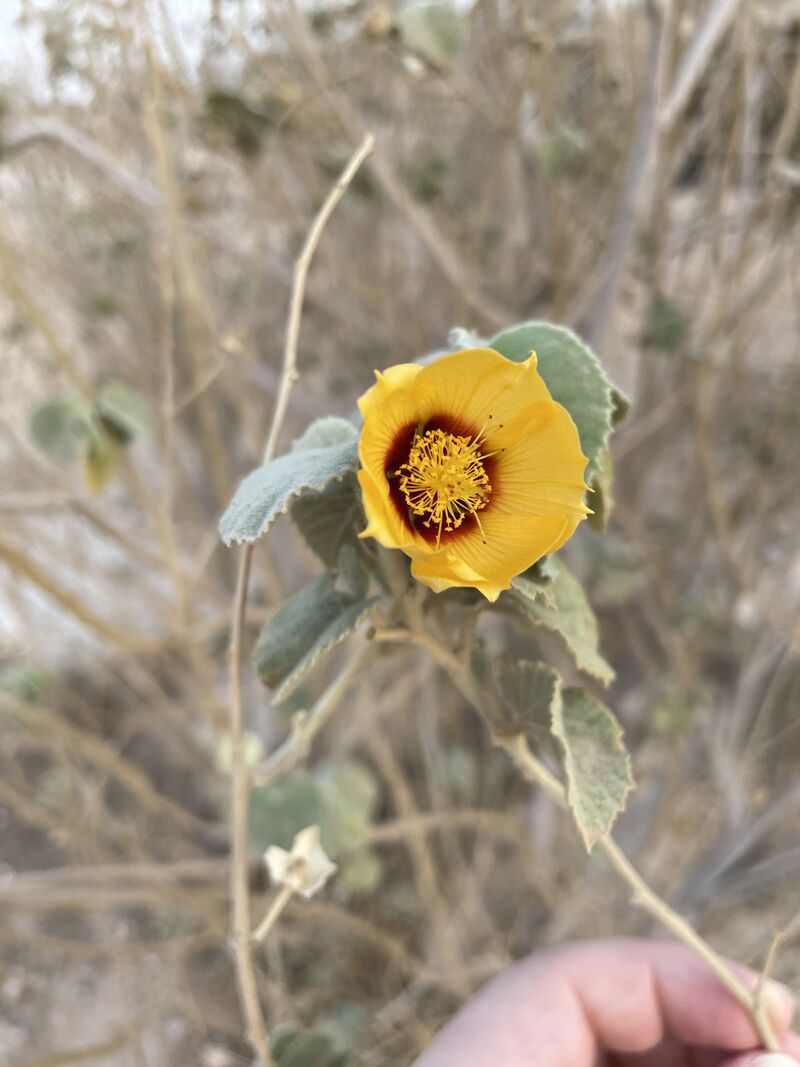
Abutilon hirtum—the softly bristled “Indian mallow”—is one of the hardiest sub-shrubs in the Arabian Peninsula, freckling rocky wadis from the Najd plateau down to Jazan. Its velvet‐textured leaves and orange-gold corollas endure searing heat and months without rain, traits that let it colonise seasonally dry tropical biomes across Africa-to-Indonesia and “many different areas in Saudi Arabia.” Each flowering stem matures into a wheel of seed-filled capsules, ensuring rapid comeback after drought or grazing and offering reliable browse for camels and goats.


Local ingenuity has long tapped that resilience: the bark yields a surprisingly fine, strong fibre that villagers once twisted into camel leads, fishing cord and even coarse cloth. Modern labs now validate the plant’s medicinal reputation. Ethanolic leaf extracts show anti-inflammatory and analgesic activities on par with indomethacin, along with antioxidant, antipyretic and emerging antidiabetic potential—effects linked to a cocktail of flavonoids and other bio-actives. In short, this unassuming desert survivor continues to weave itself into both heritage ropework and 21-st-century pharmacology.
Leave a Reply